
Neighborhood
A Course Carved from Lava: The Jones Family Legacy at Mauna Kea
In a 2025 Golf Digest feature, CBS golf broadcaster Jim Nantz called the Mauna Kea Golf Course a "family project" shaped across three generations of the Jones family. It is a story that begins with volcanic rock and ends with one of the most photographed holes in Pacific golf.
Born from lava, not land
When Robert Trent Jones Sr. arrived on the Kohala Coast in the early 1960s, the site that would become Mauna Kea Golf Course was not a golf course. It was not even, by most definitions, land ready for development. The terrain was raw, barren volcanic lava, the kind of young rock that still holds the heat of its formation and offers almost nothing to a designer accustomed to working with soil, grass, and established topography.
Jones Sr. saw something different. Working with Laurance S. Rockefeller, who was building what would become Mauna Kea Resort, the architect envisioned a championship layout carved directly from the lava fields. The construction process was, by any standard, extraordinary. Nearly the entire course was blasted, graded, and shaped from raw volcanic rock. Where most golf courses are sculpted from existing meadows or coastal scrubland, Mauna Kea was forged from the earth itself.
The course opened in 1964, and from the first tee it was clear that Jones Sr. had delivered on the promise he made to Rockefeller: to build not just a golf course, but what he called "the most beautiful hole in the world."
The par-3 third: a shot over the Pacific
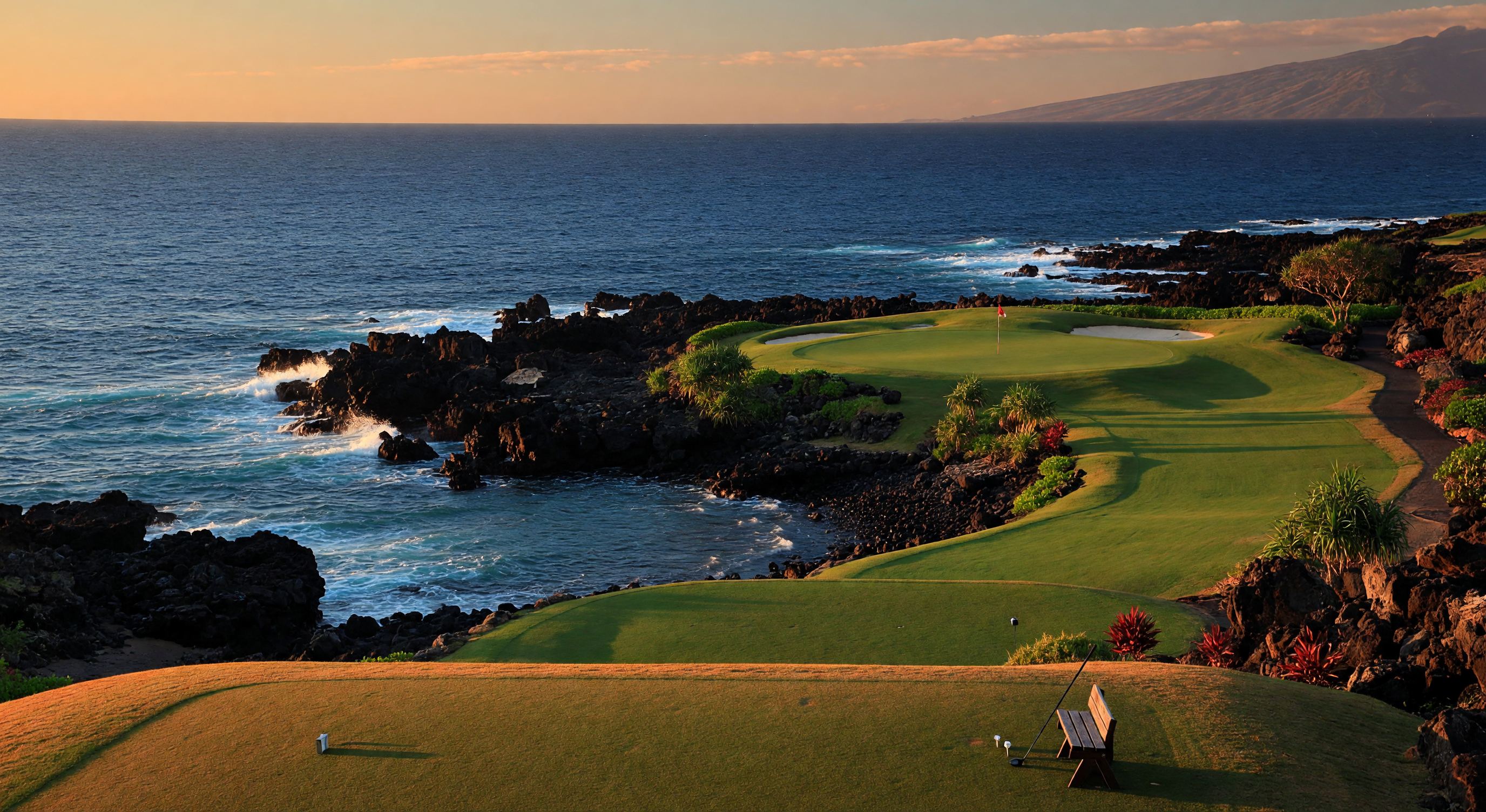
That promise lives at the par-3 third hole, which Nantz described in Golf Digest as a "daunting" test that demands a tee shot entirely over an ocean cove. The tee sits on one side of a jagged lava inlet; the green sits on the other, with nothing but Pacific Ocean between them. It is a hole that has drawn comparisons to the famous 16th at Cypress Point, and Nantz noted that for golfers who cannot secure an invitation to that Monterey Peninsula gem, Mauna Kea's third offers a worthy and equally dramatic substitute.
The hole plays shorter than its visual intimidation suggests, but that is part of Jones Sr.'s design philosophy. The danger is psychological as much as physical. The ocean is real, the lava is real, and the margin for error is narrow. It is the kind of hole that makes a golfer pause before pulling a club, and that pause is exactly what Jones Sr. intended.
A father's vision, carried by two sons
Robert Trent Jones Sr. did not work alone in perpetuity. His two sons, Robert Trent Jones Jr. (known as Bobby) and Rees Jones, both became accomplished golf course architects in their own right, and both played roles in the ongoing life of Mauna Kea. Nantz's Golf Digest piece focused on this father-son dynamic, describing the course as a multi-generational endeavor rather than a single architect's statement.
Bobby Jones, a former Yale golfer who still exhibits signs of his classic form when hitting shots at the course, has spoken about Mauna Kea holding a special place in his heart. The course was one of the defining projects of his father's career, and maintaining its character while ensuring it remained a relevant championship test became a point of family pride. Rees Jones, who earned the nickname "the Open Doctor" for his work renovating major championship venues, also contributed to the course's evolution over the decades.
Together, the Jones family transformed what was once a barren lava field into a layout that Golfweek ranked #45 among resort courses in the United States for 2024. The ranking reflects not just the original design but the sustained attention the family has given the course across six decades.
7,370 yards of volcanic challenge
At its full length of 7,370 yards, Nantz described Mauna Kea as a "beast" of a test. The course plays along the coastline with dramatic elevation changes, ocean-carrying tee shots, and the kind of routing that uses the natural lava contours rather than fighting them. The fairways wind through kiawe trees and across lava outcroppings, with the Pacific visible from nearly every hole.
The back nine, in particular, climbs and drops through the volcanic terrain in a way that few resort courses attempt. Shots that look straightforward from the tee reveal their complexity on approach, and the wind off the Kohala Coast adds a variable that changes the course's character from morning to afternoon. It is not a course that plays the same way twice, which is part of why golfers return to it.
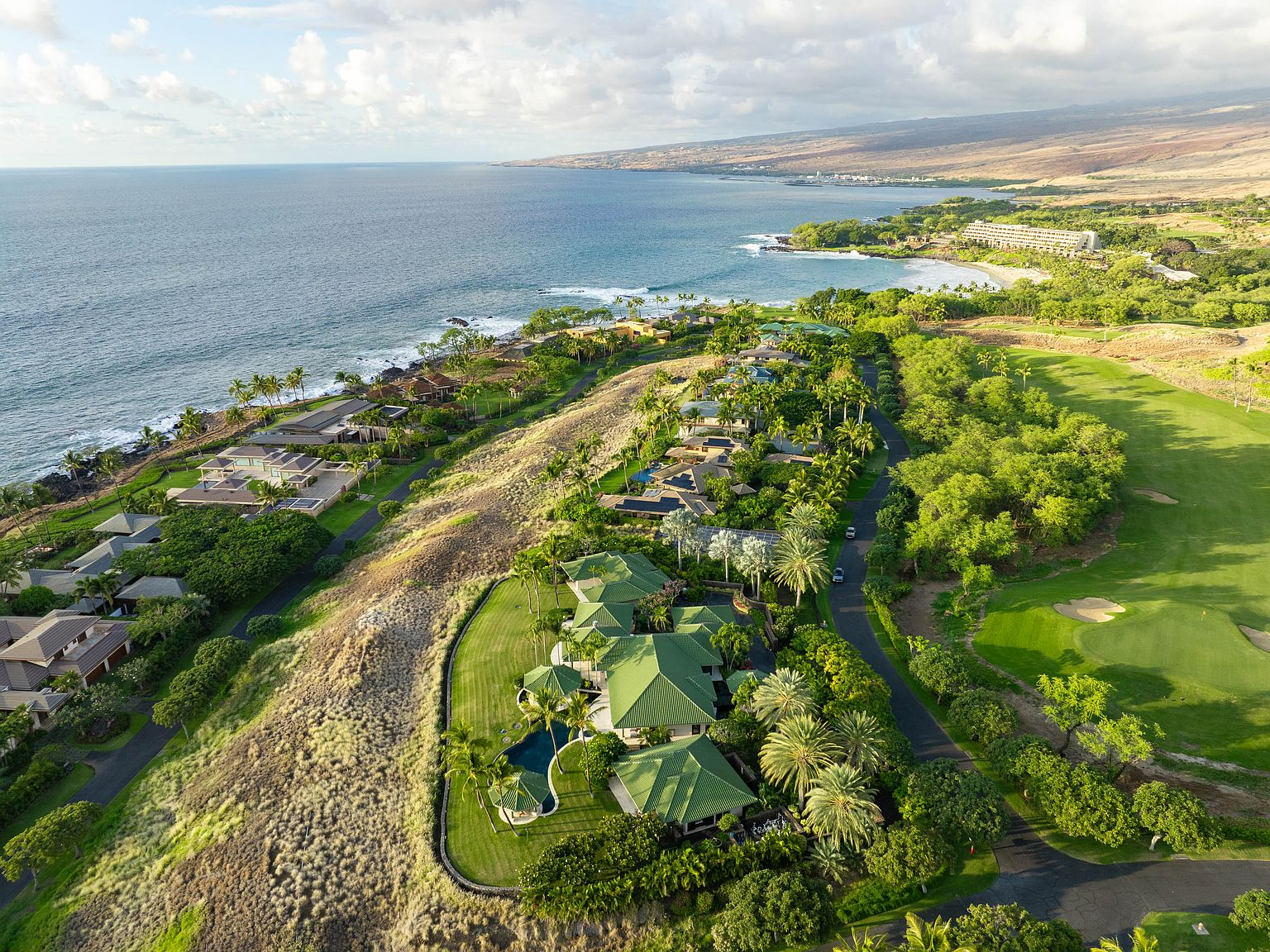
For residents of The Bluffs at Mauna Kea Resort, where Hale Kiekiena sits, the course is not a distant amenity. It is a neighbor, visible from parts of the estate and accessible within minutes. The relationship between the property and the golf course is one of proximity and shared landscape: both occupy the same volcanic terrain, both face the same ocean, and both benefit from the Jones family's decision to work with the land rather than against it.
What Nantz sees that others miss
Jim Nantz has served as a golf ambassador for Mauna Kea Resort, and his perspective on the course carries the weight of someone who has broadcast from hundreds of courses worldwide. What he emphasizes in the Golf Digest article is not just the quality of the design but the story behind it: a father who carved a championship layout from volcanic rock, and two sons who ensured it endured.
That narrative matters to buyers considering Hale Kiekiena because it speaks to the character of the community. Mauna Kea Resort is not a new development still establishing its identity. It is a place with a 60-year history, a golf course that has been cared for by the same family across three generations, and a landscape that was shaped by hand from the earth itself. The course is part of the resort's DNA, and for anyone living in The Bluffs, it is part of the daily view.