
The Home
The style of Hale Kiekiena
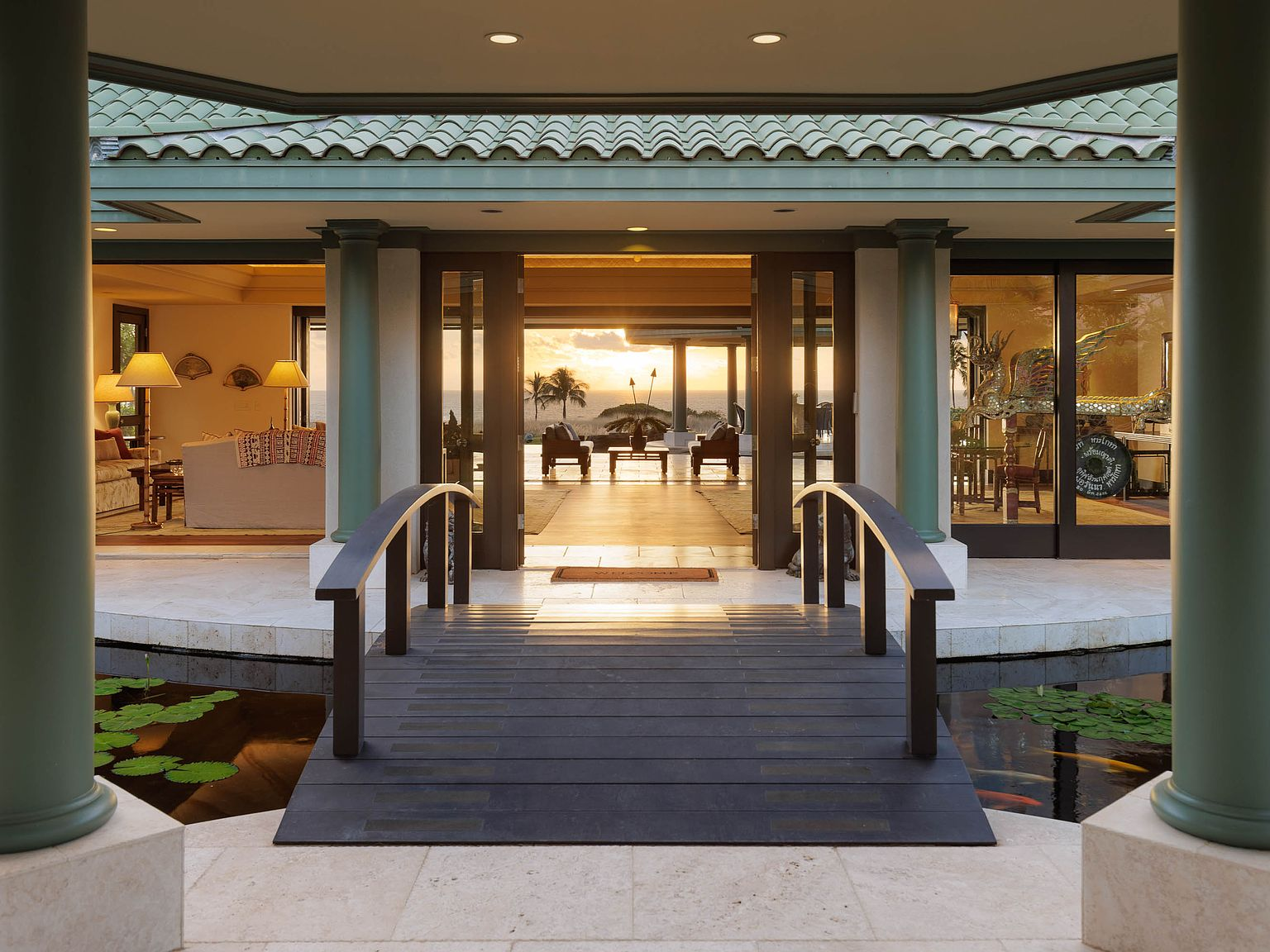
The first thing you touch at Hale Kiekiena is the wooden bridge. Hand-laid planks span a koi pond fed by the estate's water features, and the sound of moving water accompanies every entrance. It's a deliberate threshold: the moment you cross the bridge, the resort disappears and the estate takes over.
Three design traditions, one estate
The architectural language of Hale Kiekiena draws from three distinct traditions: Balinese pavilion design, Chinese decorative elements, and Hawaiian indoor-outdoor living. The result is a home that doesn't belong to any single style but instead creates its own vocabulary, one that Architectural Digest recognized when it featured the estate.
The Balinese influence shows in the pavilion-style layout: separate structures connected by covered walkways, open-air rooms with retractable pocket doors, and the emphasis on horizontal planes that echo the ocean horizon. The Chinese elements appear in the custom sea life mosaic mural, the lacquered detailing, and the decorative screens that divide spaces without closing them. The Hawaiian contribution is the most essential: the commitment to making every room open to the landscape.
The Great Room and the open-air concept
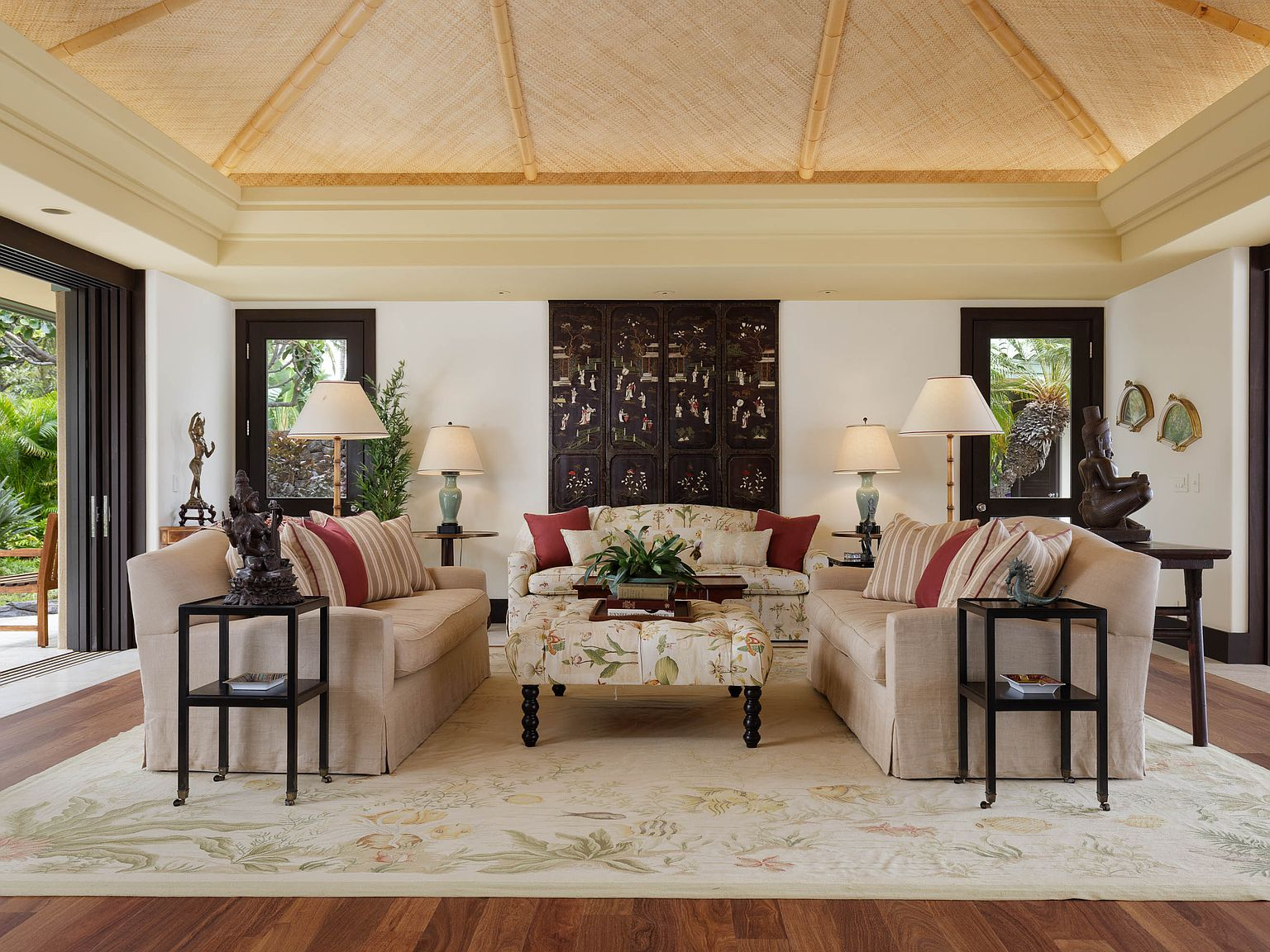
The Great Room is the estate's center of gravity. High vaulted ceilings covered in woven lauhala create a canopy effect overhead, while the dark wood framing and hardwood floors ground the space in warm, natural materials. The retractable pocket doors on the ocean-facing wall disappear entirely into the structure, creating an opening that spans the full width of the room.
When the doors are open, the boundary between interior and exterior dissolves. The lanai, the garden, and the ocean view become extensions of the living space. The ceiling height ensures cross-ventilation, and the orientation captures the prevailing trade winds that cool the Kohala Coast most afternoons.
The outdoor pavilions and koi ponds
Hale Kiekiena is organized as a collection of pavilions rather than a single monolithic structure. The main hale, the guest villa, the outdoor kitchen, and the dining pavilion are all separate structures connected by covered walkways, bridges, and landscaped paths. Water features, particularly the koi ponds, thread between these structures and create a continuous soundscape of moving water.
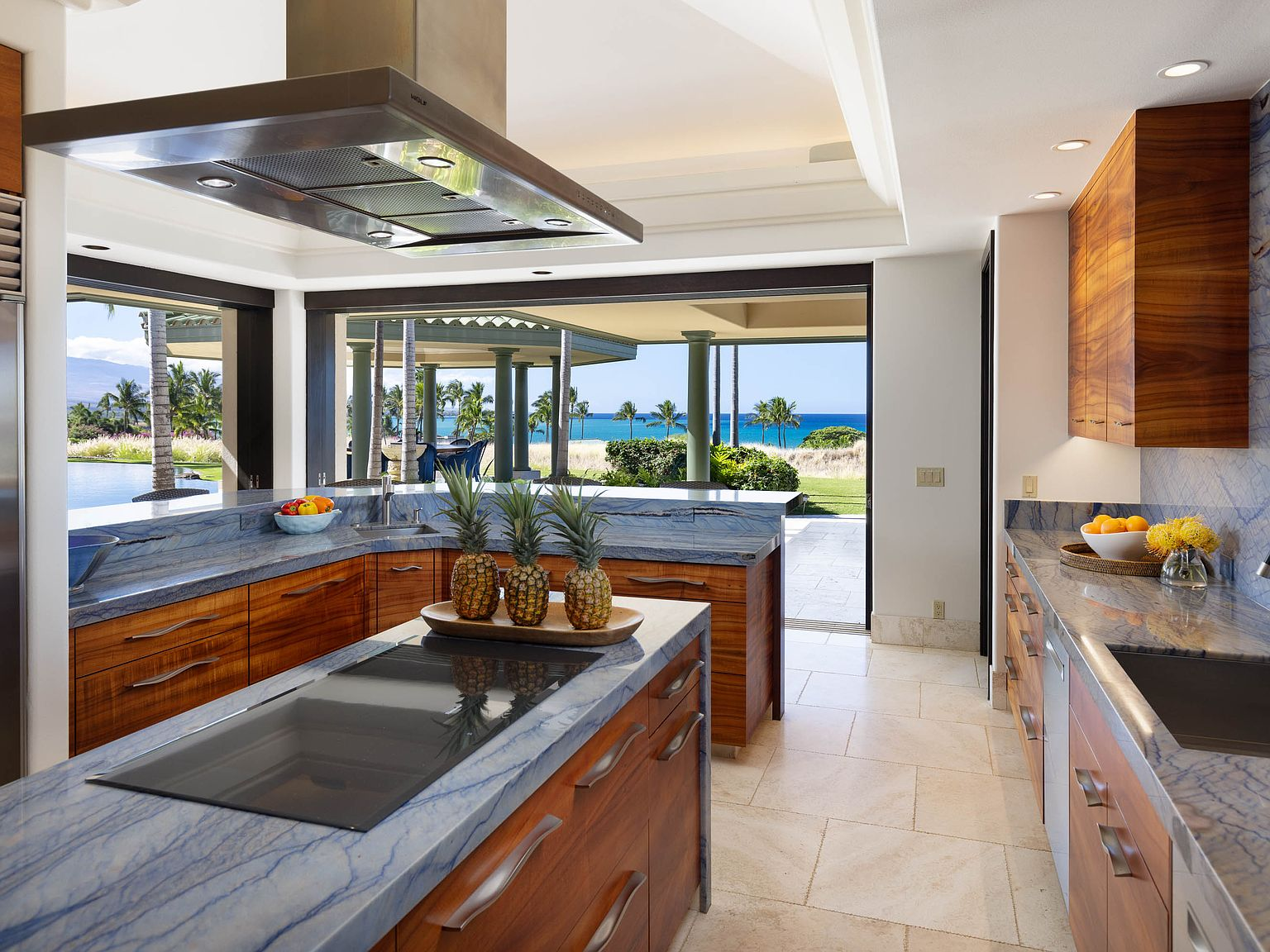
The outdoor kitchen pavilion features a vibrant blue quartzite island and countertops, stainless steel appliances, and a woven wood ceiling that mirrors the main hale's lauhala treatment. The dining pavilion sits on a circular stone platform adjacent to the water, with open sides that frame the sunset view.
Materials, surfaces, and the coastal context
The material palette across Hale Kiekiena is designed for the coastal environment. Travertine stone tile appears in the primary bedroom and bathrooms, chosen for its durability and its ability to stay cool underfoot in the tropical heat. The green-tiled roofs reference traditional Hawaiian and Asian architectural forms while standing up to the intense sun and salt air. The woven lauhala and bamboo ceiling treatments are both decorative and functional, providing texture while allowing air circulation.
The solar array on the roof is integrated discreetly, maintaining the estate's visual harmony while providing sustainable power. It's a detail that reflects the broader design philosophy: the estate works with its environment rather than against it.
The bottom line
Hale Kiekiena is not a production home. It's a hand-tuned estate where every material, every sight line, and every water feature was chosen with intention. The Balinese pavilion layout, the Chinese decorative elements, and the Hawaiian commitment to indoor-outdoor living come together in a way that's specific to this property and this place. It's the kind of home that earns the Architectural Digest mention not by being photogenic, but by being genuinely well-designed.